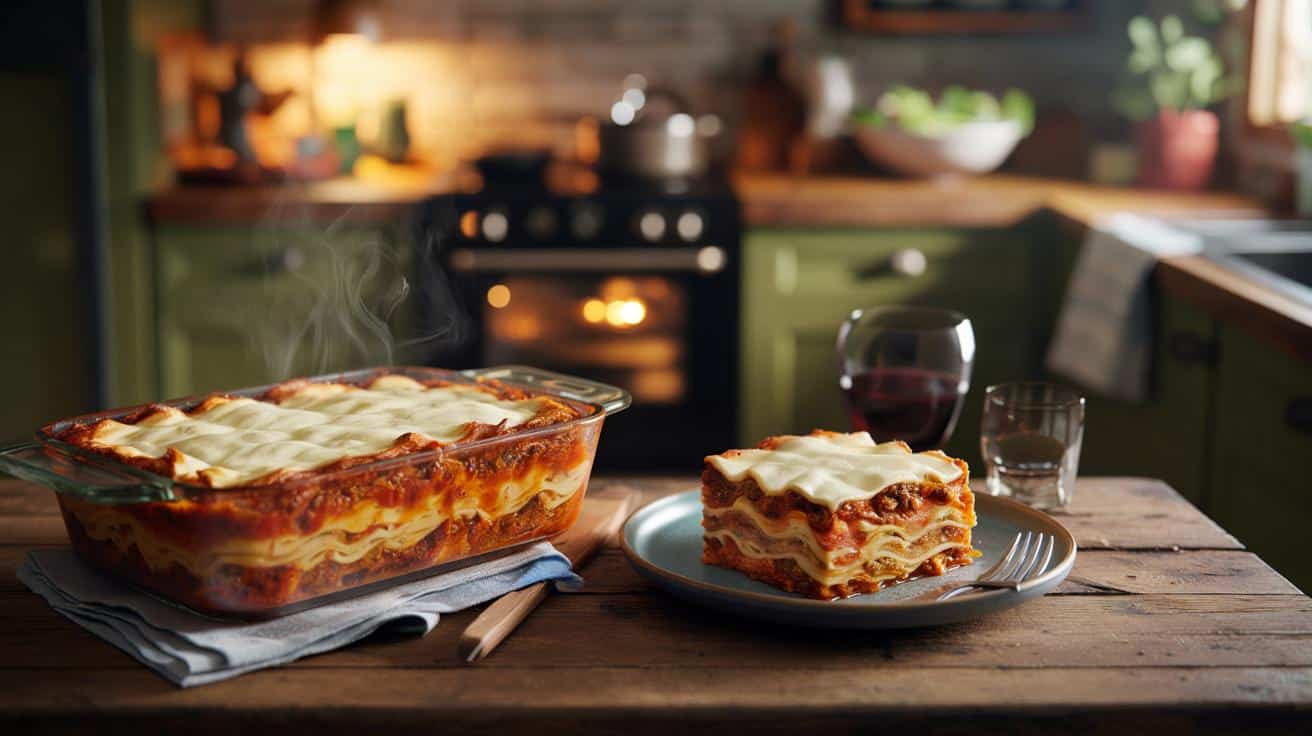
The second night, the kitchen felt strangely calmer. The sink was empty, the oven cold, the chaos of yesterday’s dinner long gone. I opened the fridge just to stare, in that idle, slightly bored way we do when we’re not really hungry yet. There, on the middle shelf, sat the glass dish from last night’s meal: a humble, slightly messy rectangle of baked comfort food. Edges darkened, cheese firmed up, sauce set. Honestly, it didn’t look like much.
I slid it into the oven anyway, more out of laziness than hope.
Twenty minutes later, the smell drifting through the apartment didn’t match the memory of the first night. Richer. Deeper. More inviting somehow. I forked a bite straight from the dish and paused, eyebrows up.
Why did this taste better today than when it came out of the oven the first time?
The strange magic of next-day comfort food
Some foods announce themselves with drama the minute they leave the oven. Lasagna bubbling over, shepherd’s pie with its golden mash, baked mac and cheese cracking at the edges. They’re photogenic, loud, hard to resist. On that first night, we rush, we burn our tongues a little, we cut too soon. The food is good, sure. But it hasn’t really had time to become itself yet.
The quiet secret? A lot of baked comfort food doesn’t peak when it’s hot and heroic on day one. It peaks in sweatpants on day two.
Think of a classic: lasagna. On day one, the top is gorgeous, the sauce is still slightly runny, and each slice leans a little to the side. You fight to serve something that looks decent, and the noodles slide like they’re trying to escape the plate. It’s messy, generous, even a bit chaotic.
Then you wrap it, stash it in the fridge, and forget about it. The next day, you reheat a square. Suddenly it holds together, the cheese tastes deeper, and the layers feel like they’ve had a long conversation overnight. You eat it over the sink or in front of Netflix and think, quietly, “This is better than yesterday.”
There’s an actual logic behind this small everyday miracle. When a baked dish cools, its starches (pasta, potatoes, rice) firm up, soaking in the surrounding sauces. Proteins in cheese and meat continue to bond with fats and seasonings. The flavors, once loud and separate, relax and mingle. Spices soften, salt distributes more evenly, and acidity calms down.
Reheating gives everything a second cycle of warmth without the rush. The result is a dish that’s less about surface drama and more about depth. *What felt like leftovers becomes something quietly upgraded.*
➡️ The one kitchen habit that could be making your meals less flavorful without you noticing
➡️ Driving licence : this new update will delight every driver, including seniors
➡️ Chefs say adding this ingredient at the wrong moment ruins the entire dish
➡️ Nutrition experts explain when leftovers are actually better for your health
➡️ If you feel mentally alert but emotionally tired, psychology explains the imbalance
➡️ This simple step keeps bathroom sinks cleaner longer
➡️ This forgotten cooking method makes food taste richer while using less oil
➡️ Food scientists reveal why this cooking temperature matters more than the recipe
How to “cook for tomorrow” without extra effort
There’s a simple trick many good home cooks use without really naming it: they cook tonight for tomorrow’s dinner. Not in some strict meal-prep way with twenty containers lined up on the counter. Just with the soft intention that the dish they throw together after work will actually be even better the next day.
The kind of recipes that love this approach are easy to spot. Think layered, saucy, baked, and slightly heavy: lasagna, enchiladas, baked ziti, moussaka, cottage pie, gratins. Anything with a sauce and a starch is almost designed to be reborn.
The method is simple. Cook the dish until fully done, not just “almost there.” Let it cool on the counter until it’s warm but no longer steaming. Wrap it well so no fridge smells sneak in. Then forget it for at least 12 hours. The next day, slice it cold: it will cut beautifully, no sliding or collapsing.
Reheat low and slow. Oven at around 160–180°C (325–350°F), covered with foil for most of the time so it doesn’t dry out. A final 5–10 minutes uncovered if you want the top to crisp again. Reheating in the oven instead of the microwave might feel like a luxury on a weeknight, but the payoff in texture is real.
This is where most of us trip up. We rush. We cut into baked dishes as soon as they leave the oven, because the smell is irresistible and we’re hungry now. The cheese pulls, the sauce runs, the photo is great, but the dish itself is still half-set. That’s not a moral failure, that’s just life.
Let’s be honest: nobody really does this every single day.
Still, when you can, give your baked comfort food more rest. That might mean cooking the lasagna in the morning for dinner, or baking the macaroni cheese tonight knowing tomorrow’s version will be the real star.
Sometimes chefs will quietly admit what home cooks discover by accident: “The second day is when the dish finally knows who it is.”
- Choose the right recipes: Layered bakes with sauce, cheese, and starch (lasagna, enchiladas, casseroles, gratins) nearly always improve overnight.
- Cool, then chill: Let the dish cool until just warm, then refrigerate tightly covered to protect its texture and flavor.
- Reheat gently: Use a moderate oven and cover with foil so the middle warms through without the top drying out.
- Add a fresh touch: A squeeze of lemon, fresh herbs, or a crunchy salad on the side stops the meal from feeling heavy.
- Portion smartly: Bake in two smaller dishes instead of one huge one, so you can eat one now and save a perfect second-day version.
Why second-day food hits a different kind of comfort
There’s another layer to this story that has nothing to do with starch molecules or cheese proteins. Reheated baked comfort food carries a mood. Yesterday, the dish was a project: chopping, browning, layering, waiting. Today, it’s a quiet gift from your past self. No peeling, no dicing, just a warm plate and a fork.
We’ve all been there, that moment when you open the fridge after a long day and suddenly remember: “Oh right, there’s lasagna.” Stress drops a notch instantly.
The second time around, you’re often less precious about the presentation. You might eat your reheated shepherd’s pie out of a bowl instead of a plate. You might stand by the stove and steal bites before it even hits the table. The ritual is looser, more private. The food doesn’t have to impress anyone.
That relaxed attitude changes the way we taste. Without the distraction of performance, we notice more: the warmth of cinnamon in the tomato sauce, the slight tang of the cheese, the way the edges crisped just enough.
Baked comfort food that tastes better the next day is a small argument in favor of slowness. Of not demanding instant perfection from everything we cook. Of trusting that time can do some of the work for us.
It also makes planning a little less punishing. One simple dish cooked on Sunday can anchor Monday’s dinner and Tuesday’s lunch, tasting richer each time. You can play with it: add a fried egg on top of yesterday’s hash brown casserole, tuck slices of leftover lasagna into a toasted sandwich, crumble cold baked macaroni into a pan and fry it into cheesy, crispy bites.
The oven, strangely enough, becomes less about spectacle and more about quiet, repeatable pleasure.
| Key point | Detail | Value for the reader |
|---|---|---|
| Choose “second-day” recipes | Pick layered, saucy bakes like lasagna, enchiladas, gratins, and casseroles | Maximizes flavor payoff with zero extra effort |
| Rest, chill, reheat gently | Cool fully, store tightly covered, reheat low and slow in the oven | Improves texture, prevents dryness, and deepens taste |
| Reframe leftovers | See day-two dishes as planned upgrades, not scraps | Reduces cooking stress and turns “what’s for dinner?” into an easy win |
FAQ:
- Question 1Which baked comfort foods actually taste better the second day?
- Question 2How long can I safely keep these dishes in the fridge?
- Question 3Is the microwave really that bad for reheating?
- Question 4How do I stop reheated pasta bakes from drying out?
- Question 5Can I freeze these dishes and still get that “better next day” effect?