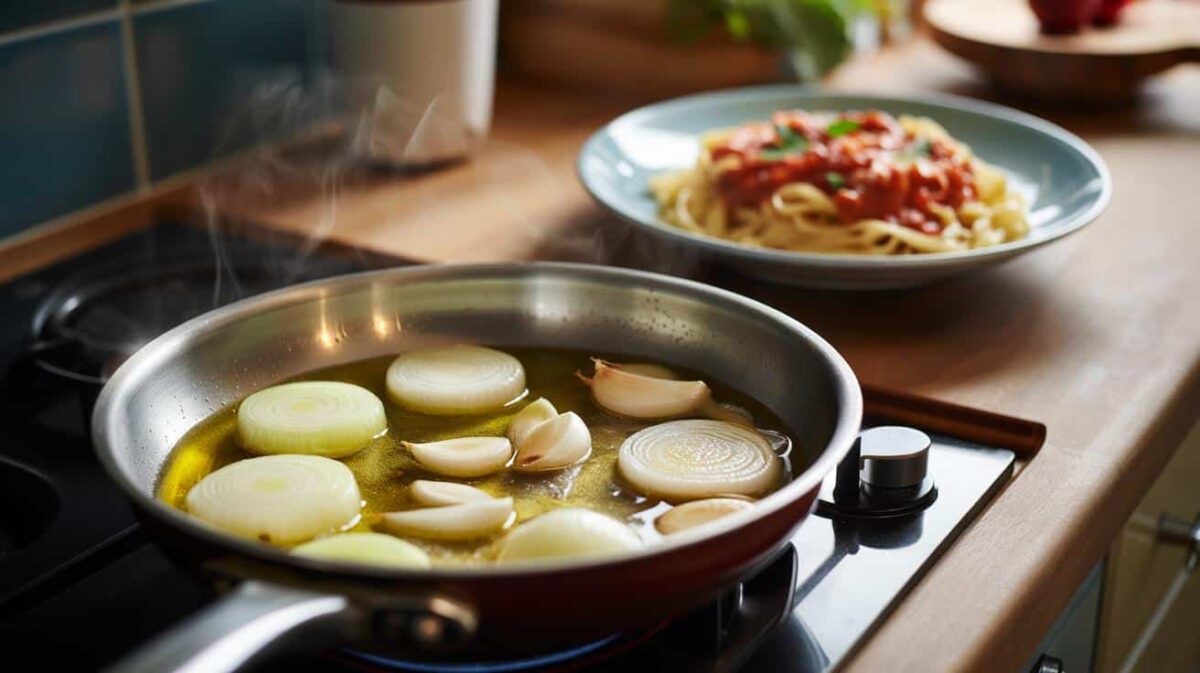
The first thing you notice is the smell.
You’ve thrown together a quick weeknight dinner, tossed a few vegetables in a pan, maybe a piece of chicken, and twenty minutes later you’re staring at a plate that looks… fine. It tastes fine too. Not bad, not great, just something to eat while you scroll on your phone.
Then you remember that pasta you had last month at that little restaurant on the corner. Same ingredients, same idea, same price range. But the flavor there felt deeper, rounder, somehow more “complete.” You kept chasing it with your fork, wondering what on earth they did in that kitchen that you’re not doing in yours.
The gap is smaller than you think.
And it usually comes down to one step almost everyone rushes or skips.
The invisible step that changes everything
Ask chefs what separates home cooking from restaurant food, and they don’t talk about truffle oil or fancy gadgets.
They talk about heat. And patience. And something they call “developing flavor in the pan.”
That missing step is this: **letting ingredients truly brown before you move on**.
Not just “kind of change color.” Not “look cooked through.” Real browning. The kind that sticks a little. The kind that smells nutty and rich and makes you suddenly hungry.
Most home cooks stir too soon, crowd the pan, or lower the heat the moment things sizzle.
Chefs do the opposite. They let the surface of the food meet fierce heat and stay there, long enough to unlock flavors that never show up in a pale, rushed sauté.
Picture two pans on two stoves.
In one, a home cook is making chicken. The pieces go into a medium pan, heat set to “safe middle,” everything jostled with a wooden spoon so nothing sticks. The chicken goes from pink to white, a little beige, and then straight into the sauce. Dinner served.
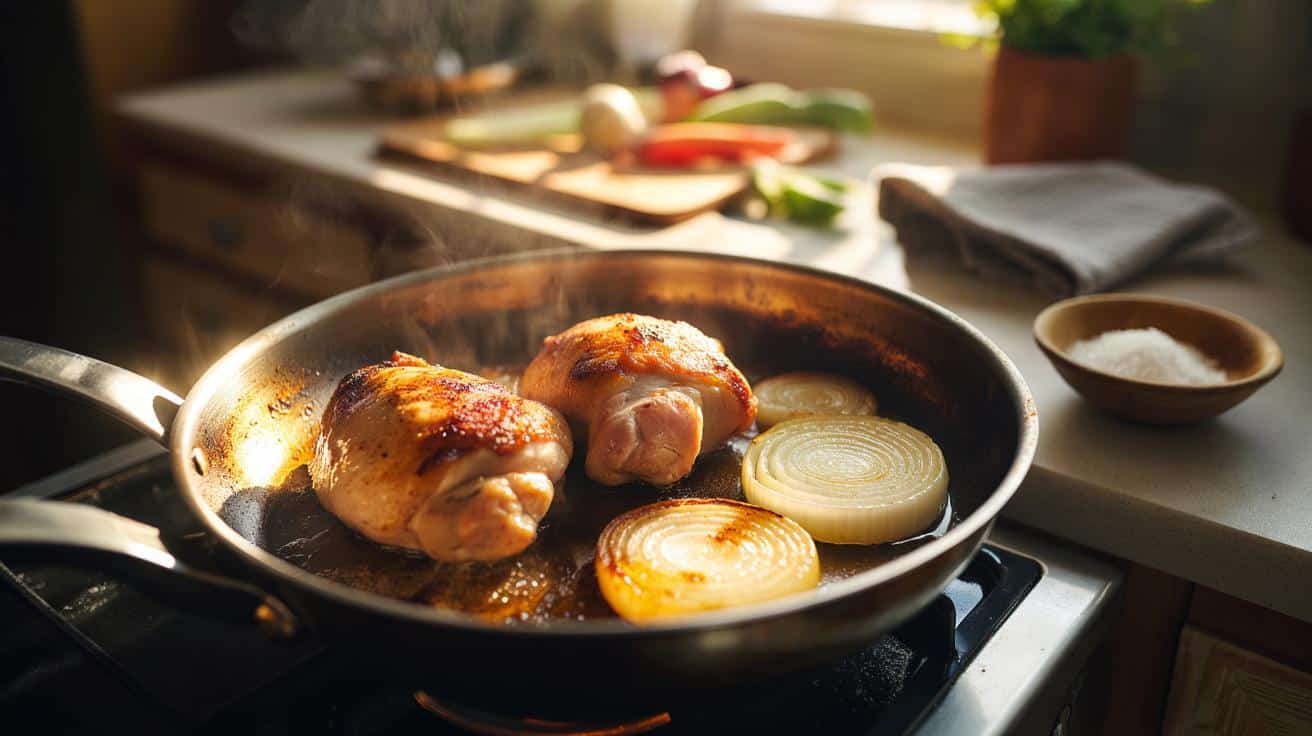
In the other pan, a line cook in a busy restaurant drops the same chicken into screaming-hot oil. The kitchen goes silent for half a second as it hits: sharp sizzle, little puffs of steam, that sudden roasted aroma. No one touches it. They resist the urge. The edges go from glossy to deeply golden, almost amber, with a few darker spots you’d probably panic about at home.
When they turn it, there’s a crust. A real one. That crust is flavor.
And it’s the base note that carries everything else.
This isn’t magic, it’s science with a very human payoff.
That browning you see on meat, onions, bread, even potatoes, is the Maillard reaction — a dance between amino acids and sugars triggered by high heat. It doesn’t happen properly when food is wet, crowded, or constantly stirred.
➡️ Starlink Unveils Mobile Satellite Internet: No Setup, No New Phone Needed
➡️ The heat-loving, low-water plant that transforms any yard into a butterfly haven
➡️ The stretching routine that eliminates hip flexor tightness from sitting
➡️ The plant that fills your garden with snakes: never plant it because it attracts them
➡️ The hidden nutritional deficiencies that cause fatigue, depression, and poor immune function
➡️ Psychologists reveal the three colors most often chosen by people with low self-esteem
➡️ The Southern Ocean current reverses for the first time, signaling a risk of climate system collapse
Food needs space, heat, and time on the surface of the pan to go from simple to complex.
That “restaurant taste” you keep chasing is basically layers of these browned bits, built slowly. First on your protein or veg, then on the bottom of the pan, then pulled back up into sauces, glazes, and broths.
Skip that step and you’re not failing as a cook. You’re just stopping right before the good part starts.
*This is the flavor tax most of us accidentally refuse to pay.*
How to brown food like a chef (without burning dinner)
Here’s the move, stripped down to something you can actually use on a Tuesday night.
Start with a pan that’s a bit bigger than you think you need. Turn the heat higher than feels comfortable — usually medium-high for stainless steel or cast iron, a touch lower for nonstick.
Add your oil and let it heat until it shimmers, not just vaguely warms. Then dry your food on a paper towel so it doesn’t go in damp. Salt it. Lay it in the pan gently, giving each piece its own space. It should hiss the moment it hits.
Now the crucial part: don’t touch it.
Let it sit for 2–5 minutes, watching the edges turn brown. Fight the urge to poke. Only flip when it releases easily and has a solid golden crust. That’s the step.
Most of us grew up with a quiet fear of burning food, so we tend to flinch early.
We shuffle things around the pan the moment we hear a louder sizzle, or we drop the heat at the first whiff of “toasty.” That instinct protects dinner from disaster, but it also keeps it stuck in the “fine, I guess” zone.
Another common trap: overcrowding the pan. When you pile in too much food, it steams instead of browning. The temperature drops, moisture floods the surface, and you end up with pale, soft pieces sitting in their own juices. The taste is flatter, more one-note, no matter how much garlic or herbs you throw at it later.
Let’s be honest: nobody really does this every single day.
You will absolutely have nights when you just want food on a plate. But when you do have 10 extra minutes, this is where you want to spend them.
Chefs talk about this step like it’s non-negotiable, not optional.
Not because they’re chasing perfection, but because it makes every other step easier. A well-browned base means you need less salt, fewer spices, and almost no culinary gymnastics to get depth.
“People think restaurant food is about secret ingredients,” one chef told me during a slow afternoon prep shift. “Ninety percent of the time, it’s just that we brown things properly and we don’t rush the pan. That’s it. That’s the trick.”
- Dry your food before it hits the pan: moisture kills browning.
- Use a pan that’s large enough so pieces don’t touch.
- Wait for real sizzle when the food lands.
- Give it time: don’t stir or flip too early.
- Use the browned bits (fond) with a splash of wine, broth, or water to build instant sauce.
From “just dinner” to something you actually remember
Once you start paying attention to this single step, it changes how you cook almost everything.
Onions go past soft and translucent into deep golden sweetness. Mushrooms stop leaking water and start tasting meaty. Even something as simple as zucchini, caramelized until the edges are browned, suddenly tastes like it belongs in a bistro instead of a side bowl no one touches.
We’ve all been there, that moment when you put down a plate and quietly think, “Huh. This tastes kind of flat.” Browning is the quiet fix that doesn’t demand a new recipe, only a new habit. It’s not as flashy as learning to flambé or mastering handmade pasta, but it will quietly upgrade nearly everything you already cook.
What’s interesting is how quickly your palate adjusts.
After a few weeks of actually letting things color, you start noticing when food doesn’t have that depth. Boiled chicken tastes sadder. Pale, rushed vegetables feel almost watery, even if they’re technically seasoned. You’re not being snobby, you’re just used to more complexity now.
You might even find yourself planning meals “around the browning.” Thinking about which element in the pan will carry that roasted, caramelized note, and how the rest of the dish can support it. That’s how professionals think. Not about recipes, but about layers.
This is where home cooking starts to feel a little less like survival and a little more like craft.
Not perfect. Just intentional. Just yours.
There’s no rule that says your kitchen has to compete with a restaurant.
But the secret most chefs will tell you, if you catch them in an honest mood, is that you already have almost everything you need. A decent pan, some heat, basic ingredients, and a willingness to let them sit there long enough to transform.
You don’t need a tasting menu, you need that moment when you flip something and think, Oh. That’s what it’s supposed to look like.
You might try it first with chicken thighs, or a pile of onions, or a single steak on a quiet night when no one is rushing you. Then you build it into your routine in small, forgiving ways.
Over time, this one, easily skipped step becomes part of how you move in the kitchen.
And the line between “home food” and “restaurant food” starts to blur, bite by bite.
| Key point | Detail | Value for the reader |
|---|---|---|
| Let food truly brown | Use higher heat, space in the pan, and resist stirring | Deeper, restaurant-style flavor without changing recipes |
| Control moisture | Dry ingredients and avoid overcrowding | Better texture, more caramelization, fewer “soggy” meals |
| Use the browned bits (fond) | Deglaze with liquid to build simple sauces | Instant flavor boost for pastas, meats, and vegetables |
FAQ:
- Question 1How do I know the difference between browning and burning?
- Question 2Can I still brown properly with a nonstick pan?
- Question 3Does this work for vegetables or just meat?
- Question 4What if my food sticks to the pan?
- Question 5Is high heat safe for everyday cooking?