You get home, the oven clock is flashing noon, and you realise there’s been a power cut. The freezer hums along, the drawers are frosty, everything looks perfectly normal. Yet some foods may have thawed and refrozen without you noticing, quietly turning into a risky bacterial brew.
The invisible danger hiding in a perfectly frozen drawer
Freezing is a powerful way to preserve food, but it has limits that many households underestimate. Cold slows down bacteria; it does not make them disappear. Once the temperature starts to rise, microbes wake up and multiply fast.
Food safety agencies across Europe and North America repeat the same warning: frozen food that has significantly thawed, even once, can become unsafe, especially if it sat for hours at room temperature before refreezing.
Freezing pauses bacteria; warmth restarts them. A long power cut can turn yesterday’s leftovers into a genuine health risk.
To get a sense of the scale, food scientists often use a simple calculation. Some bacteria can double every 20 minutes at room temperature. After just three hours, that means up to 1,000 times more bacteria than at the start. The dish may still look, smell and taste fine. Your gut might strongly disagree a few hours later.
That’s the heart of the problem with power cuts: you usually have no idea how long your food was in the danger zone between cold and warm. And your freezer offers you no clue—unless you give it one.
The coin-in-the-freezer trick that tells the whole story
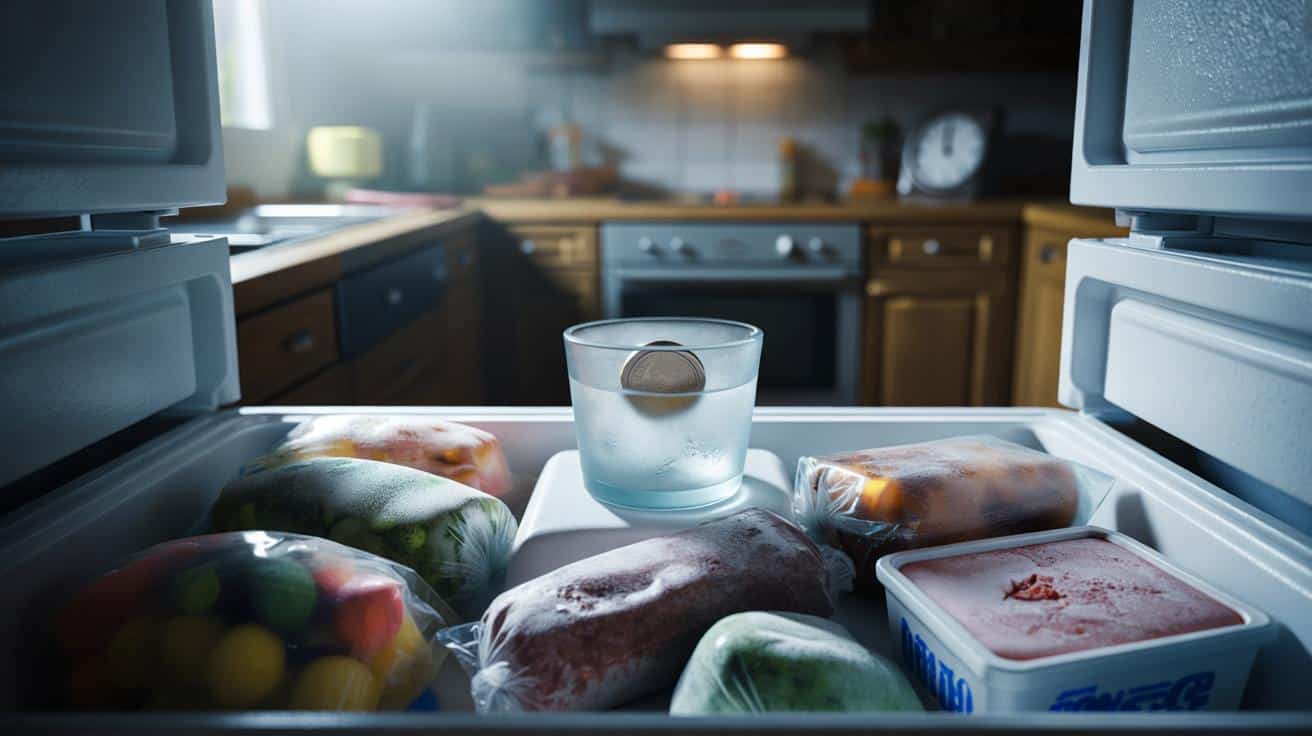
Over the past few years, a simple hack has spread on social networks and in food safety advice columns: the “coin in a cup of ice” test. The idea is to turn a bowl of frozen water into a kind of black box recorder for your freezer.
How to set it up step by step
You only need a small container, tap water and a coin. The whole operation takes a couple of minutes.
- Fill a small bowl, cup or ramekin with water.
- Place it flat in the freezer and leave it until the water is completely frozen solid.
- Put a coin on top of the block of ice.
- Return the bowl to the freezer and leave it there permanently.
This simple set‑up works like a visual indicator. As long as the temperature stays low enough, the ice doesn’t melt and the coin remains on the surface. If a power cut warms the freezer enough for the ice to melt partly or fully, the coin sinks. When the temperature drops again and the water refreezes, the coin is trapped lower down.
➡️ Here is the favorite color of people smarter than average
➡️ The hidden nutritional deficiencies that cause fatigue, depression, and poor immune function
➡️ The plant that fills your garden with snakes: never plant it because it attracts them
➡️ This everyday food behaves differently depending on how you cut it, scientists explain
➡️ Can you whiten laundry with bleach?
➡️ Why your digestion feels unpredictable even when your diet doesn’t change
➡️ Starlink Unveils Mobile Satellite Internet: No Setup, No New Phone Needed
➡️ The heat-loving, low-water plant that transforms any yard into a butterfly haven
A single glance at the position of the coin tells you whether your freezer really stayed frozen while you were away.
What the coin’s position means for your food
Once the system is in place, the real value comes the day you suspect a power outage—after a storm, a blown fuse, or a weekend away.
Coin still on top: likely safe
If the coin is still sitting neatly on the surface of the ice, the water never melted. That suggests the freezer temperature did not rise enough to thaw your food. In that case, your frozen products are likely to have remained safely below freezing throughout.
You should still use basic common sense: check packaging, look for any signs of deformation, ice crystals inside bags, or unusual smells once cooked. But in this scenario, there is no sign of a significant break in the cold chain.
Coin halfway down or at the bottom: red flag
If the coin is buried deep in the ice, or resting at the bottom of the bowl, the situation changes. At some point, the water melted enough for the coin to fall, which means the freezer was warm for a while.
A sunken coin is a warning signal: assume a prolonged thaw and treat the food as potentially unsafe.
When that happens, food safety experts usually advise being strict, especially with high‑risk items. That includes:
- Meat and poultry
- Fish and seafood
- Prepared dishes (lasagne, curries, stews)
- Ice cream and dairy‑based desserts
- Ready‑to‑eat frozen meals
These products can harbour bacteria such as Salmonella, Listeria or Campylobacter. If they thaw and refreeze, there is no reliable way to judge their safety just by look or smell. The recommendation is blunt: when in doubt, throw them out.
Why refreezing food is such a bad idea
Many households try to avoid throwing food away by refreezing what seems only “slightly soft”. That instinct is understandable, especially with rising food prices. Yet refreezing brings two separate problems: texture and safety.
| Issue | What happens when food is refrozen |
|---|---|
| Texture and quality | Ice crystals grow, breaking cell walls in meat, fruit or vegetables. Once cooked, the food can turn mushy, dry or grainy. |
| Bacterial growth | During the thaw, bacteria multiply. Freezing again pauses them, but does not reduce their numbers. You finish with a higher bacterial load than at the start. |
Food agencies therefore advise never refreezing food that has fully thawed, especially if it reached room temperature. The only partial exception is for food thawed in the fridge that has stayed consistently chilled, then cooked thoroughly before being frozen again as a new dish.
Best practices to limit the risk during power cuts
The coin test is just one piece of the safety puzzle. Several simple habits can dramatically reduce the chance of getting sick after a blackout.
Before an outage: small preventive steps
- Keep your freezer well filled. A packed freezer stays cold longer than a half‑empty one because frozen food acts like ice blocks.
- Group items in baskets or bags so cold air escapes less quickly when you open the door.
- Note the date on homemade frozen meals to avoid leaving them for months.
During and after an outage: what to do
- Avoid opening the freezer door. Every opening lets in warm air and accelerates thawing.
- A full freezer can often keep a safe temperature for about 48 hours if the door stays closed. A half‑full one, closer to 24 hours.
- Once power returns, check the coin, feel the temperature, and inspect food for obvious thawing, like softened ice cream or bags stuck together by refrozen liquid.
Use the coin as your first indicator, then combine it with common sense checks before deciding what to keep.
What food poisoning from thawed food really looks like
People often underestimate how unpleasant a bout of food poisoning can be. Typical symptoms include nausea, vomiting, diarrhoea, stomach cramps and a fever. They usually arrive a few hours to two days after eating the contaminated meal.
For healthy adults, most cases are self‑limiting but can still mean a miserable 24 to 72 hours. For children, pregnant women, older people or anyone with a weakened immune system, complications are more serious. Dehydration, kidney problems or hospitalisation are not rare in severe cases.
From a purely financial point of view, throwing away a drawer of questionable food hurts. Yet compared to days off work, medical treatment, or long‑term gut issues, the calculation changes quickly. The tiny effort of freezing a coin becomes an easy, low‑tech insurance policy.
Practical scenarios: how the coin helps you decide
Imagine you leave for a three‑day break and a thunderstorm causes a long outage the first night. The power comes back the next afternoon, well before you return. Without a coin test, you open your freezer on Sunday evening and see rock‑hard food. You shrug and cook as usual.
With the coin system, you open the drawer, notice the coin at the bottom of the ice, and know the entire block melted at some point. Combined with slightly deformed packaging and refrozen frost, this tells you the food did warm up significantly. You can then make an informed decision rather than relying on guesswork.
On the other hand, if the coin is still on top and everything is solid, you avoid needlessly throwing away expensive meat or frozen vegetables just because the oven clock was flashing.
Other low‑tech tricks to protect your frozen food
The coin is not the only way to monitor or protect your stocks. Some households keep a simple freezer thermometer inside. If you know the power was off for a few hours, you can check whether the needle still points to −18°C or close.
You can also freeze bottles of water and use them as cold reserves. Placed in gaps in the freezer, they act like extra ice blocks, slowing down warming during outages. Should the power go off, those bottles then help keep both the freezer and a cooler bag cold if you decide to transfer some items.
For people who rely heavily on frozen food—large families, batch cooks, or rural homes far from shops—combining the coin trick, a thermometer and better organisation offers a robust safety net. None of these solutions are high tech, but together they sharply cut the risk that a silent power cut turns tonight’s dinner into tomorrow’s stomach ache.