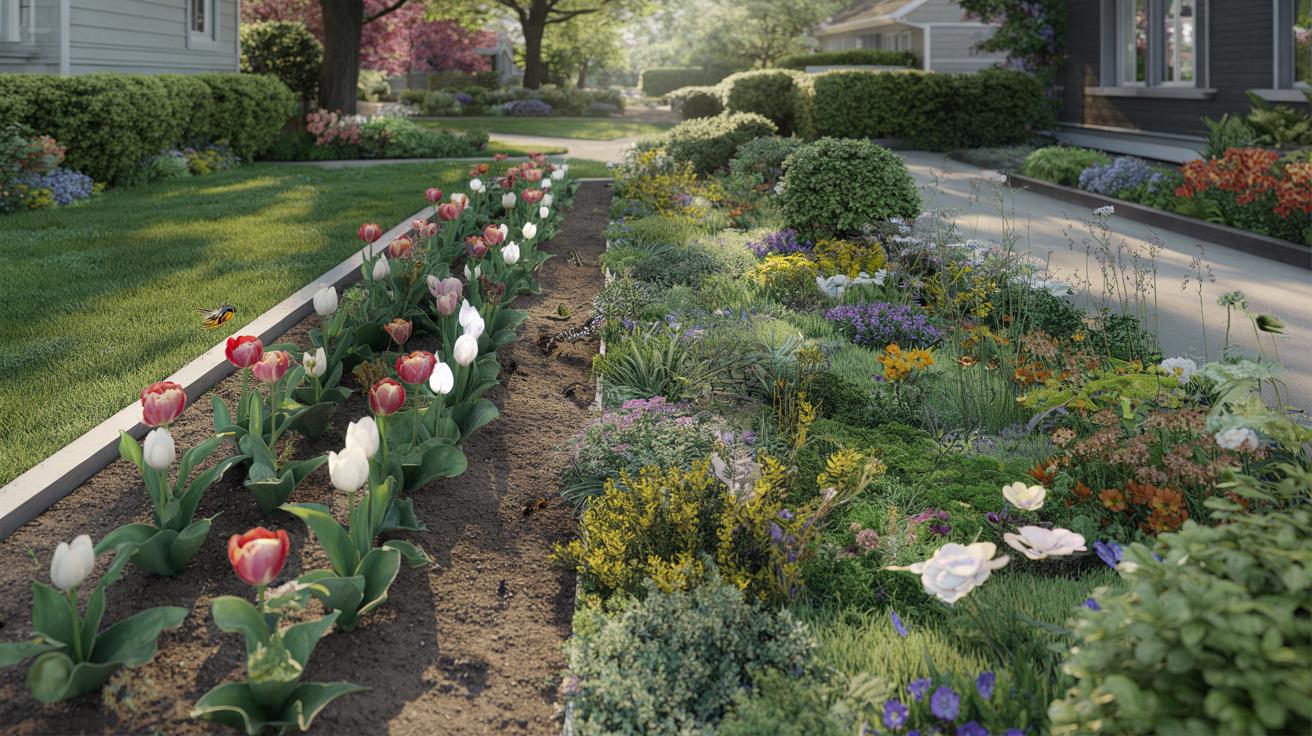
On a quiet Sunday morning, I watched my neighbor line up his new flower bed with a builder’s tape measure. Tulips every 20 centimeters, one straight row, not a single petal leaning the wrong way. It looked like a floral parking lot. Clean, yes. Beautiful, in a catalog kind of way. But after a few weeks, something felt off. There was color, but no movement. No buzzing, no tiny dramas of life, no surprises in the corners. Just silence around shining petals.
A few gardens down, another bed looked half-wild, a bit messy, almost improvised. Bees hovered, ladybirds crawled, small birds hopped between stems. One garden felt alive, the other looked like a showroom.
Same street, same climate, same sun. Very different stories.
When a “perfect” flower bed turns into a green desert
Walk through any suburban street in spring and you’ll spot them instantly: flower borders so straight they could guide planes to land. Geraniums in identical pots, pansies in a rigid grid, not a leaf daring to cross the line. At first glance, these gardens look tidy and reassuring. The kind you might see in a real estate ad, with the caption “low-maintenance”.
But spend ten minutes really observing them and something feels strangely flat. The air is quiet. The soil looks bare between plants. One type of bee might fly by, sniff around, and leave. A few weeks of bad weather, a disease, or a slug invasion, and the whole “perfect” display can collapse in one season.
There’s a woman I met in Brittany who was proud of her ultra-ordered rose bed. Same variety, same color, same height, all roses planted like soldiers in a parade. For two years, neighbors praised her for the beauty of those straight lines. Then came a wet spring and black spot disease hit. Within a month, her roses were devastated. No other species in the bed, no ground cover, no variety of heights or roots. The disease spread like wildfire because it had no barrier.
Across the pathway, her neighbor had roses tangled with lavender, sage, calendula, and self-seeded poppies. Not everything looked pristine, yet disease patches stayed local, insects thrived and the bed bounced back without chemical help.
Planting too neatly often means choosing just a handful of species you repeat like wallpaper. This uniformity might please the human eye, but it starves the ecosystem. Different insects need different flower shapes and blooming times. Birds need seeds, sheltered corners, and small insects to hunt. When everything is aligned, same height, same gap of soil, same few species, nature has nothing to work with. *A garden can be visually full and ecologically empty at the same time.*
Neatness also means more visible bare soil between plants, which dries out faster and offers little refuge. The result is a space that looks controlled, yet is surprisingly fragile.
How to plant for life instead of just for looks
One simple shift changes everything: think layers, not lines. The most vibrant gardens for biodiversity borrow their structure from wild meadows and forest edges. That means mixing heights, shapes, and flowering periods instead of creating a single uniform band. Start by choosing a mix of native perennials, a few annuals, and some flowering shrubs if you have room.
➡️ The Decathlon full-suspension electric mountain bike is at the perfect price for Christmas
➡️ This simple step keeps bathroom sinks cleaner longer
➡️ Chefs say adding this ingredient at the wrong moment ruins the entire dish
➡️ If you feel mentally alert but emotionally tired, psychology explains the imbalance
➡️ The one kitchen habit that could be making your meals less flavorful without you noticing
➡️ More than 6 minutes in the dark: the most anticipated solar eclipse is almost here
➡️ The hidden reason your homemade sauces never taste quite right
Then resist the urge to plant in strict rows. Plant in loose groups of 3–7 of the same species, then repeat those clumps irregularly. Leave tiny pockets of “empty” space for self-seeding flowers to settle. Suddenly, the bed looks more natural, less like a hotel lobby and more like a living scene.
Many gardeners confess they pull out every seedling they don’t recognize. Out of fear of “weeds”, we sometimes erase future allies. A more generous method is to let some unknown seedlings grow for a while, observe the leaf shape, how insects use them, how they fill gaps. You can always edit later. We’ve all been there, that moment when you realize you’ve been carefully weeding out wild violets or forget-me-nots for years.
Forget the myth that a biodiverse garden must look chaotic. You can keep paths clean, outline beds clearly, and still let the interior be slightly loose and evolving. Let’s be honest: nobody really does this every single day.
“Biodiversity-friendly gardening is not about neglect, it’s about *intelligent* laziness,” laughs a landscape ecologist I interviewed. “You stop fighting every spontaneous plant and start selecting the ones that help your local wildlife.”
- Mix flower shapes (tubes, open cups, flat umbels) so different pollinators find what they need.
- Stagger flowering times from early spring to late autumn to offer a long buffet.
- Use groundcovers to protect soil and shelter beetles, spiders, and tiny larvae.
- Keep a few “messy corners” with leaves, rocks, or old stems for overwintering insects.
- Limit chemicals and leave aphids for ladybirds and birds to feed on.
Letting go of control without losing your garden’s soul
The hardest step isn’t learning which plant attracts which insect. It’s accepting that a truly living garden will never look like a showroom all year long. Some tulips will flop. A self-seeded marigold will pop up in the middle of your sophisticated palette. A patch of clover might decide your lawn is an open invitation. You don’t need to surrender your taste to invite more life in. You just need to loosen your grip slightly.
The line between “too neat” and “enough structure” is personal. Your garden can still reflect who you are, your culture, your sense of order, while leaving room for accidents of beauty.
| Key point | Detail | Value for the reader |
|---|---|---|
| Diversify planting | Mix species, heights, and flowering times instead of single-species rows | Attracts more insects, birds, and beneficial predators |
| Allow controlled “mess” | Keep small wild pockets, self-seeders, and shelter zones | Boosts resilience against disease, drought, and pests |
| Think ecosystem, not decor | See flowers as part of a living network, not just colors | Creates a garden that stays beautiful and alive in the long term |
FAQ:
- Question 1Will my garden look abandoned if I stop planting in straight rows?
- Answer 1No. You can keep clear paths, defined edges, and intentional groupings while letting the interior be more natural. The goal is soft structure, not visual chaos.
- Question 2Are native plants really better for biodiversity than exotic flowers?
- Answer 2Generally yes. Local insects and birds evolved with native species, so they tend to offer more nectar, pollen, and shelter that wildlife can actually use.
- Question 3Can a small balcony or tiny yard still support biodiversity?
- Answer 3Absolutely. A few diverse pots with different flower shapes and blooming times can already feed bees and hoverflies, especially in concrete-heavy neighborhoods.
- Question 4Do I have to stop using all pesticides?
- Answer 4The less you use, the better. Many problems shrink on their own once predators and beneficial insects return. Start by reducing sprays and observing what nature balances for you.
- Question 5How fast will I see a difference in wildlife if I change my planting style?
- Answer 5Often within a single season. Add varied flowers and a bit of shelter, and you’ll usually notice more bees, butterflies, and birds surprisingly quickly.